Nonfiction the Catharsis Crew Has Been Enjoying
Some of our staff members share works we’ve read recently and describe what we liked about them. Creative nonfiction can be so many different things and presented in so many different ways. We encourage everyone to read more of it, and for our aspiring contributors to find inspiration in what they read.
Madeline Riske
Editor-in-Chief
I have selected “The Morning After” by Ellen Bass to highlight as a piece that I really admire. As the title suggests, this poem explores a speaker’s internal monologue the morning after an intimate night with their beloved. I love the way that this poem uses images to create tension between the sensual evening prior and the speaker’s current experience of the morning’s mundaneness. The speaker’s beloved seems to carry no trace of the feelings beheld the evening before: “Didn’t we shoulder / our way through the cleft in the rock of the everyday / and tear up the grass in the pasture of pleasure?” and yet this morning “You’re hurrying to pack your lunch, snapping / the lids on little plastic boxes.” I love that the speaker is so vulnerable about their confusion. “I want to slick back my hair and tap-dance up the wall. I want to do it all / all over again—dive back into that brawl.” The absurdity of their statement and the internal rhyme between wall, and brawl, and the repetition of “all” that carries over the line really emphasizes the drama of the speaker’s point. When I read a poem like this, I am excited about the way that image and metaphor can carry truth. The speaker may not be actually tap-dancing on the wall, but does this metaphor come closer to capturing the speaker’s feeling than any actual action could? I like to think so. And that last line: and you’re going to make your special crab cakes / that have ruined me for all other crab cakes / forever” AGH. While some might assume that keeping statements more general is what makes them relatable, I think specificity is what can connect most with a reader, capturing the frustration of being so infatuated and in love that you can’t even handle yourself. The best reason to be frustrated, I would say!
Piper Kearney
Assistant Editor-in-Chief
I recently read “The Mirror Test” from Melissa Febos’ essay collection Girlhood for a creative nonfiction class. The essay weaves together pop culture references, historical information, interviews, and Febos’ personal narrative to ruminate on the conversation surrounding women’s body and how it shapes them. What struck me most about the piece is how all the different forms of creative nonfiction combine into one product. Personally, I find personal testimony to be most impactful when placed alongside a broader cultural context—and Febos is just so good at this!
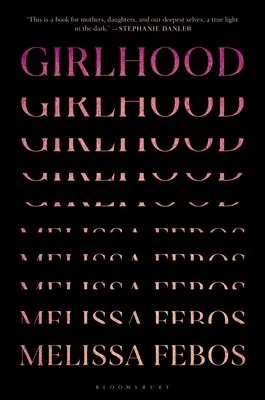
“Here is a story: around other girls I was fat and misfit, condemned by some inherent
flaw in my body's constitution. Here is another story: around men I was desirable, possessed by a
flickering power that I did not know how to control.”
Ella Fritz
Acquisitions Editor
Some of my favorite creative nonfiction definitely comes from Carmen Maria Machado’s memoir In the Dream House. Machado incorporates vignettes from her own life combined with essays on domestic abuse in the lesbian community and how it flies under the radar. Machado uses vivid imagery from her life that pulls from her own experiences, also exploring how she learned to become comfortable in a fat body during sex and in life. I think it’s fun to incorporate both memories into writing as well as facts from professionals and historical tie-ins. Machado makes it known that domestic violence in lesbian relationships has been occurring for decades, and how her own experience with it shaped her life for years.
Bluets by Maggie Nelson is described as: “the work hybridizing several prose and poetry styles as it documents Nelson’s multifaceted experience with the color blue, and it is often referred to as a lyric essay or prose poetry.” I enjoyed this novel considering it wasn’t an easy read: it asked a lot of questions about relationships and using the color blue as a simile to translate this. The more creative, the better. The more complex, the better.
Jessica Housour
Acquisitions Editor
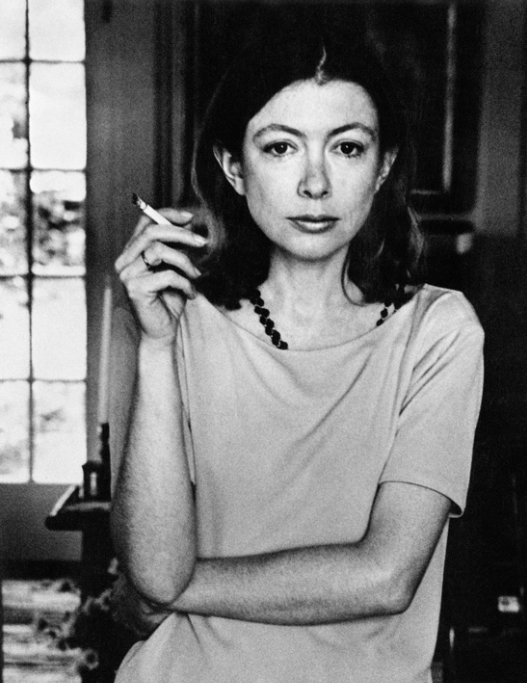
I recently read Joan Didion’s popular essay “On Keeping a Notebook,” which is featured in her essay collection titled Slouching Towards Bethlehem. I think it’s both an excellent piece of nonfiction and an excellent piece on writing nonfiction. Didion’s voice is engaging and interrogative, pulling the reader into scenes from her life via notebook entries and ultimately grounding us in the fact that to keep a notebook is to “keep in touch,” like being pen-pals with old versions of ourselves. She questions the nature and relevance of truth in recording personal moments and events. Recalling a particular entry, she says that “perhaps it never did snow that August in Vermont… but that was how it felt to me, and it might as well have snowed, could have snowed, did snow.” If it takes you back to that moment, makes you smell the air and hear the noises surrounding you and feel the weight of its emotion, then just maybe it’s the truth. At least I think Joan Didion thinks so.
Photo credit: Julian Wasser
Emily Veksler
Web Editor
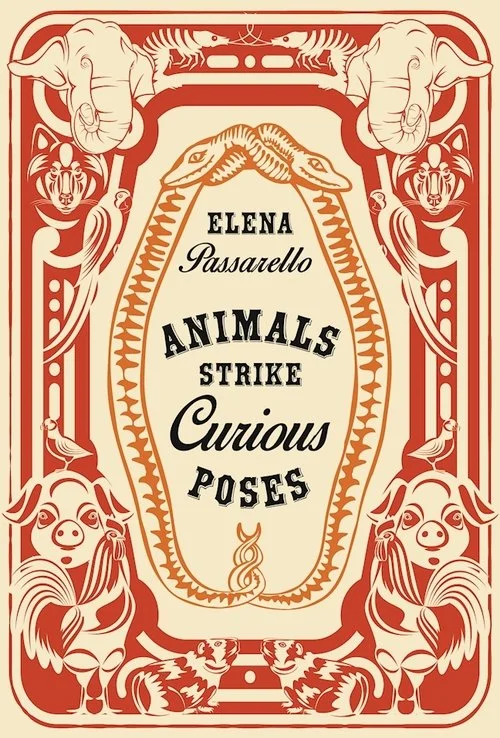
When I visited the Mission Creek Book Fair, Elena Passarello’s Animals Strike Curious Poses caught my eye. This essay collection highlights various famous animals throughout history. With its fascinating trivia and introspective musing, this book was exactly my cup of tea. I think it’s a great example of research-based creative nonfiction. Passarello’s narratives cover events from the past in a factual manner, yet she maneuvers those stories into something more metaphorical and thought-provoking by making creative connections.
In an interview with Jess Kibler of Tin House (now the McCormack Writing Center), she says, “It’s such a humbling experience to engage in an act of research. I also love the way that it allows me to sort of geek out and feel like I’m sharing new information, so there’s that selfish motivation. And I think it helps me express things without being personal, which is very important to me, because I rarely flex that personal muscle successfully. It’s not that I discount other people who do, but my engine doesn’t work in that way”.
A through-line of this book is looking at how humans project certain things about themselves onto the animals. In the same way, nonfiction writers can project their personal thoughts and experiences onto other stories, be it through an essay about a historical event, a scientific finding, or even a literary critique.